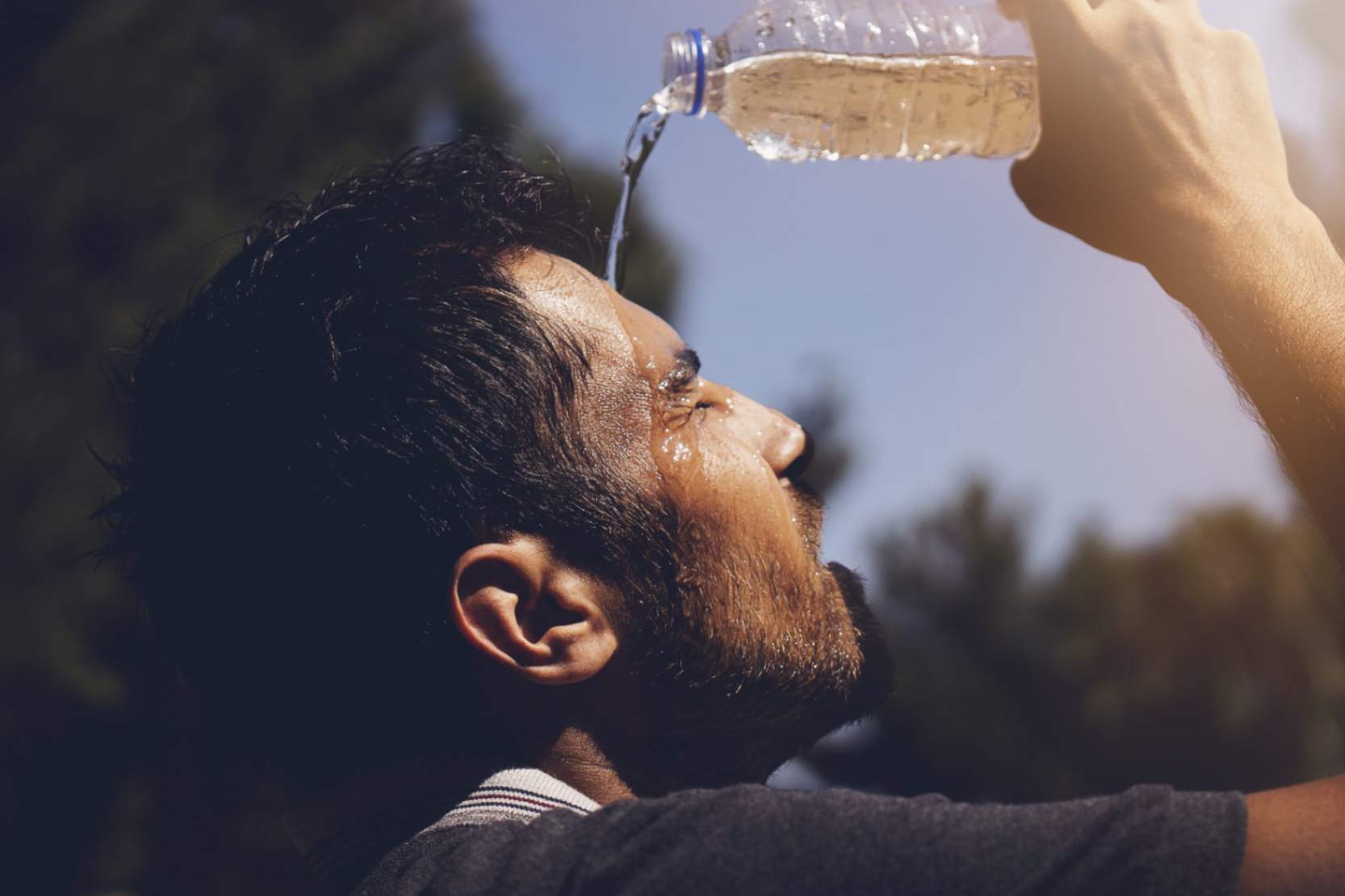
Exercising in hot conditions can affect both our health and sports performance. Normally, the body cools itself by sweating, but sometimes sweating isn’t enough, and the body temperature keeps rising. During high humidity, sweat stays on the skin but doesn’t cool; it just dehydrates.
Heat stress occurs when our body is unable to cool itself enough to maintain a healthy body temperature. Heat-related illnesses range from being mild, such as cramps or a rash, to serious conditions such as heat stroke, which can be life-threatening.
Most of us realise that when exercising in the heat, we need to drink more fluid to avoid dehydration. However, dehydration is just one aspect of heat stress. Other causes of heat stress include: exposure to high radiant heat (sun between 11 am & 3 pm), playing indoor sports such as basketball under a tin roof with poor airflow, and when the body struggles to get rid of excess heat due to protective clothing, such as helmets, pads and arm guards worn by cricketers.
The following are some recommendations to help reduce the risk of heat stress.
- Avoid exercising in the heat of the day if possible (11 am-3 pm)
- Deliberately cool the body before and after an event using fans, mist sprays or ice baths if available.
- Prepare very cold fluids (like a slushie) for cooling on the inside (use a straw to avoid “brain freeze”), as well as hydration.
- Change clothes if able, as wet clothing can reduce the efficiency of sweating.
- Prepare ice towels (towels soaked in water then frozen) and drape over shoulders to cool down during breaks in play (used at the Australian Open)
- Food and fluids containing mint or menthol (such as Freezie Sour Patch lollies) can help us to feel “less hot” by altering our perception of heat.
Nutrition also plays a vital role in helping reduce the impact of heat stress on our health and sports performance. Our bodies are all different, so there is never a “one size fits all” nutrition and hydration strategy. For example, we all sweat at different rates, and the ability to access and tolerate fluid varies between sports and athletes. Sports Dietitians Australia, the peak body for evidence-based sports nutrition in Australia, suggest athletes seek the advice of an Accredited Sports Dietitian for guidance, as both over- and under-drinking during exercise can be potentially harmful.
Make an appointment with our Accredited Sports Dietitian, Jo Allan, online by clicking the booking button below or by calling 4356 2588

 Helping the Central Coast Feel Well, Move Well and Perform Well!