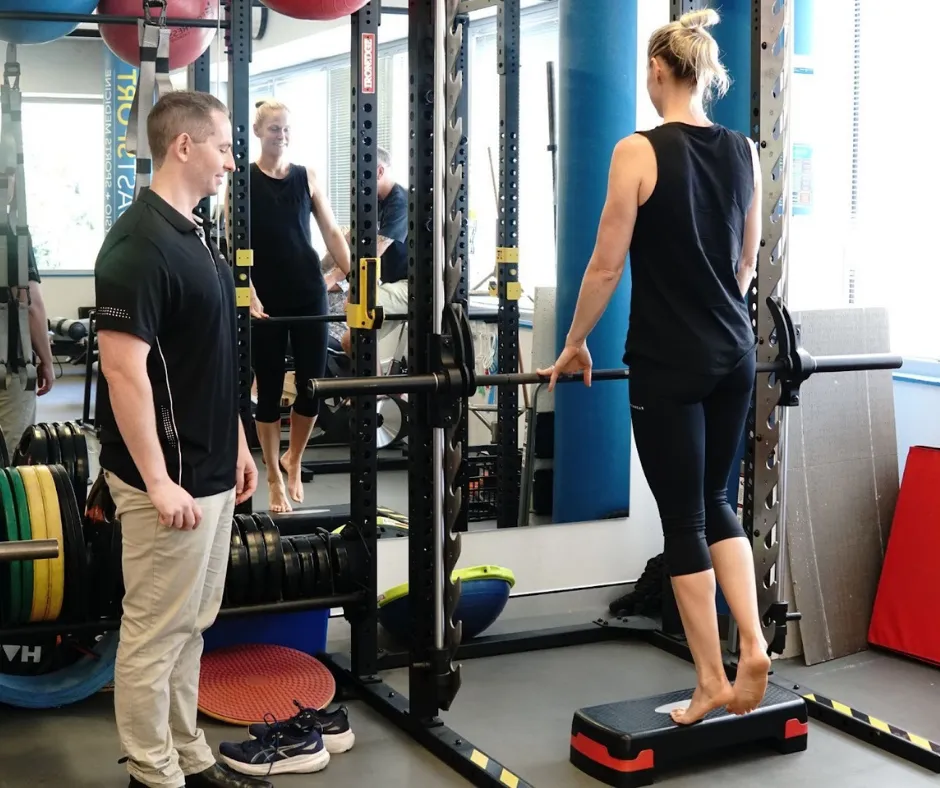
As sports podiatrists working in a sports medicine practice, we regularly help people manage Achilles tendon pain that affects walking, running, and daily activity. While often called Achilles tendonitis, most ongoing cases involve a tendon that has become sensitive to load rather than inflamed.
Research shows the most effective recovery comes from a structured management program, not rest alone. This typically includes Achilles tendonitis exercises, sensible activity modification, and supportive strategies such as Achilles tendon stretching exercises where needed.


Why Achilles Tendon Pain Occurs
Achilles pain usually develops when the tendon is exposed to more load than it can tolerate, such as:
- Sudden increases in walking, running, or training
- Returning to activity after time off
- Changes in footwear or surfaces
- Reduced calf strength or ankle movement
Pain does not mean the tendon is permanently damaged. In most cases, it means the tendon needs gradual reconditioning.
Why Achilles Tendonitis Exercises Matter
Tendons need progressive loading to recover. Complete rest may reduce pain temporarily but does not improve long-term tendon strength.
Well-planned Achilles tendonitis exercises help to:
- Improve tendon strength and resilience
- Increase tolerance to daily and sporting activity
- Reduce pain gradually over time
Exercises are progressed based on symptoms to allow safe adaptation.
Stretching To Help With Achilles Tendon Pain
Achilles tendon stretching exercises incorporate dynamic exercises exposing the tendon to various loads, along with exercises aiming to improve overall ankle mobility.
Stretching may help when:
- Ankle movement is limited
- Calf tightness increases strain on the tendon
- Discomfort occurs with ankle bending
The aim is to support comfortable ankle mobility, not to force flexibility.
Load, Movement, and Daily Activity
In everyday movement, the Achilles tendon must handle both load and stretch at the same time. Rehabilitation focuses on gradually improving tolerance to:
- Walking and stair climbing
- Hills and uneven surfaces
- Higher-impact activities when appropriate
This helps rebuild confidence and function over time.
Activity Modification and Load Management
What you do outside of exercise sessions matters. Effective load management includes:
- Avoiding sudden spikes in activity
- Temporarily reducing high-impact exercise if pain is high
- Gradually increasing activity as symptoms improve
Some discomfort is often acceptable, provided pain does not progressively worsen.
What a Typical Management Program Includes
Most Achilles tendonitis programs include:
- Education: Understanding pain and safe movement
- Exercise: Progressive Achilles tendonitis exercises
- Mobility: Achilles tendon stretching exercises if stiffness is present
- Load planning: Gradual return to normal activity
This balanced approach supports long-term recovery and reduces recurrence.
Common Mistakes to Avoid
- Relying on stretching alone
- Avoiding movement completely
- Returning to activity too quickly
- Ignoring ongoing pain patterns
Key Takeaway
Effective management of Achilles pain focuses on progressive Achilles tendonitis exercises, sensible load management, and supportive Achilles tendon stretching exercises. Dynamic stretching exercises help with mobility, however recovery depends on rebuilding the tendon’s ability to tolerate load.
If Achilles pain is limiting your activity, book an appointment with one of our practitioners so we can help guide a structured, personalised management plan.



 Helping the Central Coast Feel Well, Move Well and Perform Well!