Whether you’re chasing a new Snatch PR or just trying to survive a high-volume set of kipping pull-ups, your shoulders are working hard. While CrossFit is an incredible way to build functional strength, the volume of overhead movements makes shoulder health a top priority.
Shoulder injuries account for approximately 26% to 28% of all CrossFit-related injuries, but most of these are preventable with the right approach.


Common Shoulder Injuries in CrossFit
Because the shoulder is the most mobile joint in the body, it relies heavily on muscles and ligaments for stability. When demand exceeds capacity, injuries can occur
- Rotator Cuff Tendinopathy: Often an “overuse” injury. This happens when the four small muscles that stabilise your shoulder become irritated from repetitive overhead pressing, snatches, or thrusters.
- Shoulder Impingement: This occurs when the tendons or bursa in the shoulder are “pinched” during overhead movements. Usually, this is caused by poor thoracic (mid-back) mobility or scapular (shoulder blade) weakness.
- Labral Tears: Common in gymnastics movements like butterfly pull-ups or heavy Olympic lifts. You might feel a “deep” ache or a clicking sensation when rotating your arm.
- AC Joint Sprains: Often caused by “dipping” too deep in ring dips or catching a heavy clean with poor shelf position, putting excessive pressure on the joint where your collarbone meets your shoulder.
Preventing injuries
You don’t have to stop lifting to save your shoulders. Here are some exercises to add to your warm-up to prevent a shoulder injury
1. Prioritise Thoracic Mobility
If your mid-back is stiff, your shoulders have to “make up” the range of motion to get a barbell overhead. This puts them in a vulnerable, impinged position.
Two go-to drills to add to your warm-up:
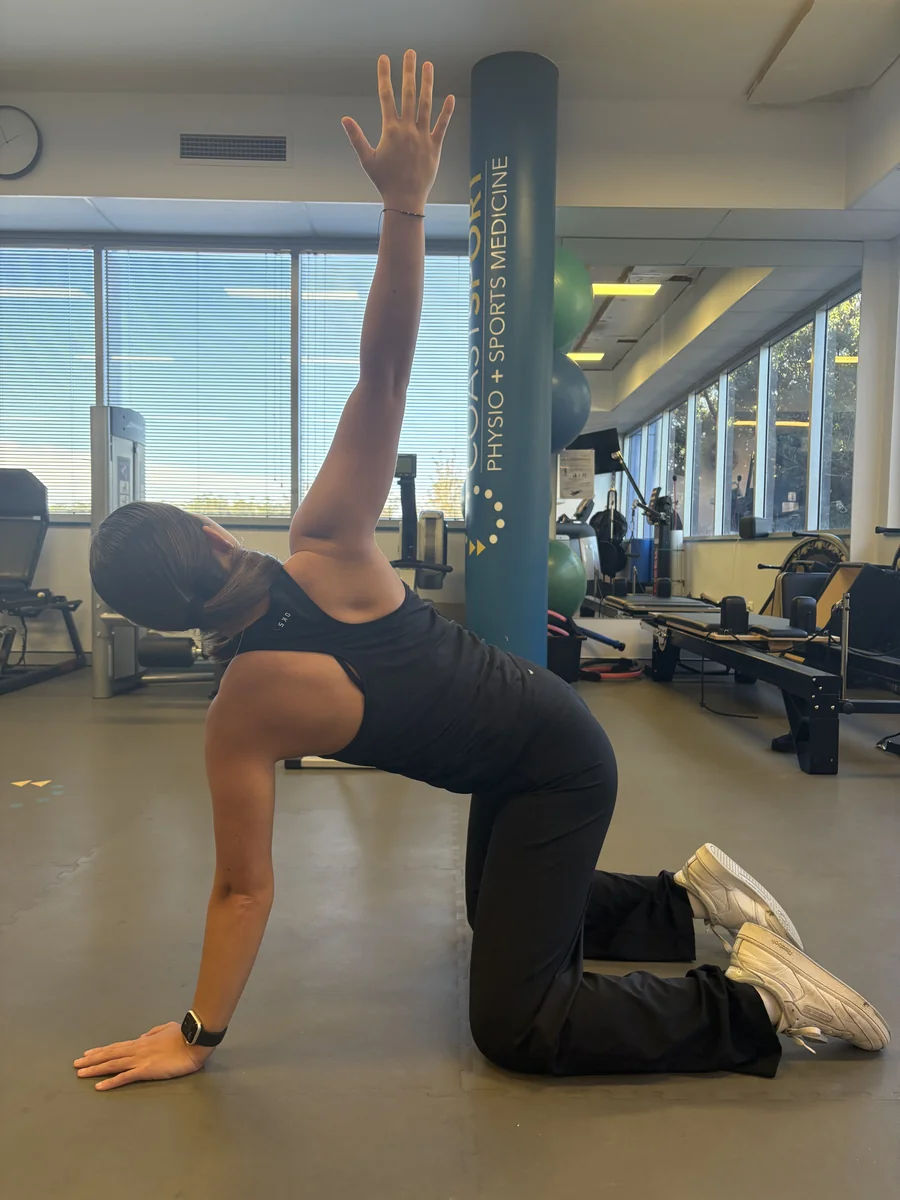
- Thread the Needle — Start on all fours. Slide one arm under your chest and reach as far through as comfortable, letting your shoulder and head rest on the floor. Hold for 2 seconds, then thread back up and open to the ceiling. 3 sets of 8 reps each side. Watch out for: shifting your hips sideways instead of keeping them stacked over your knees.
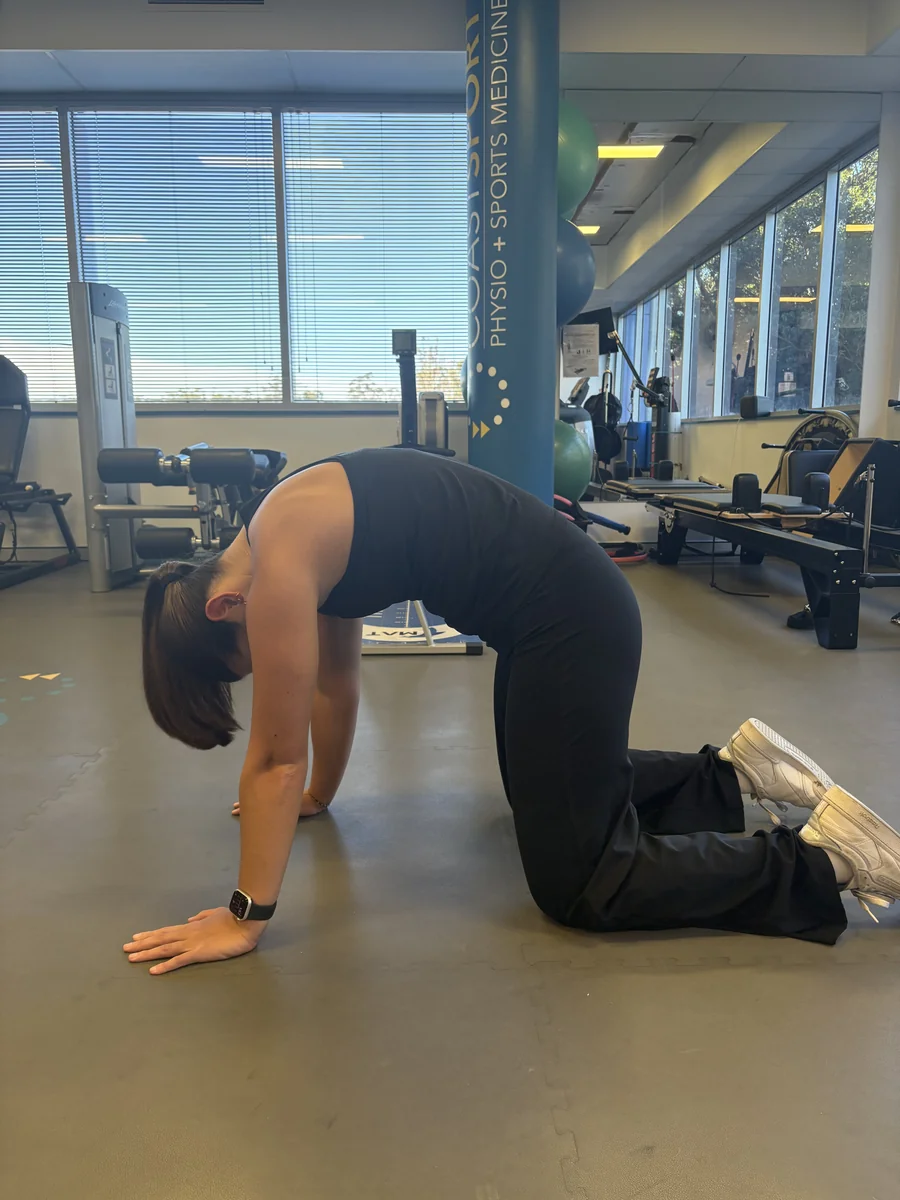
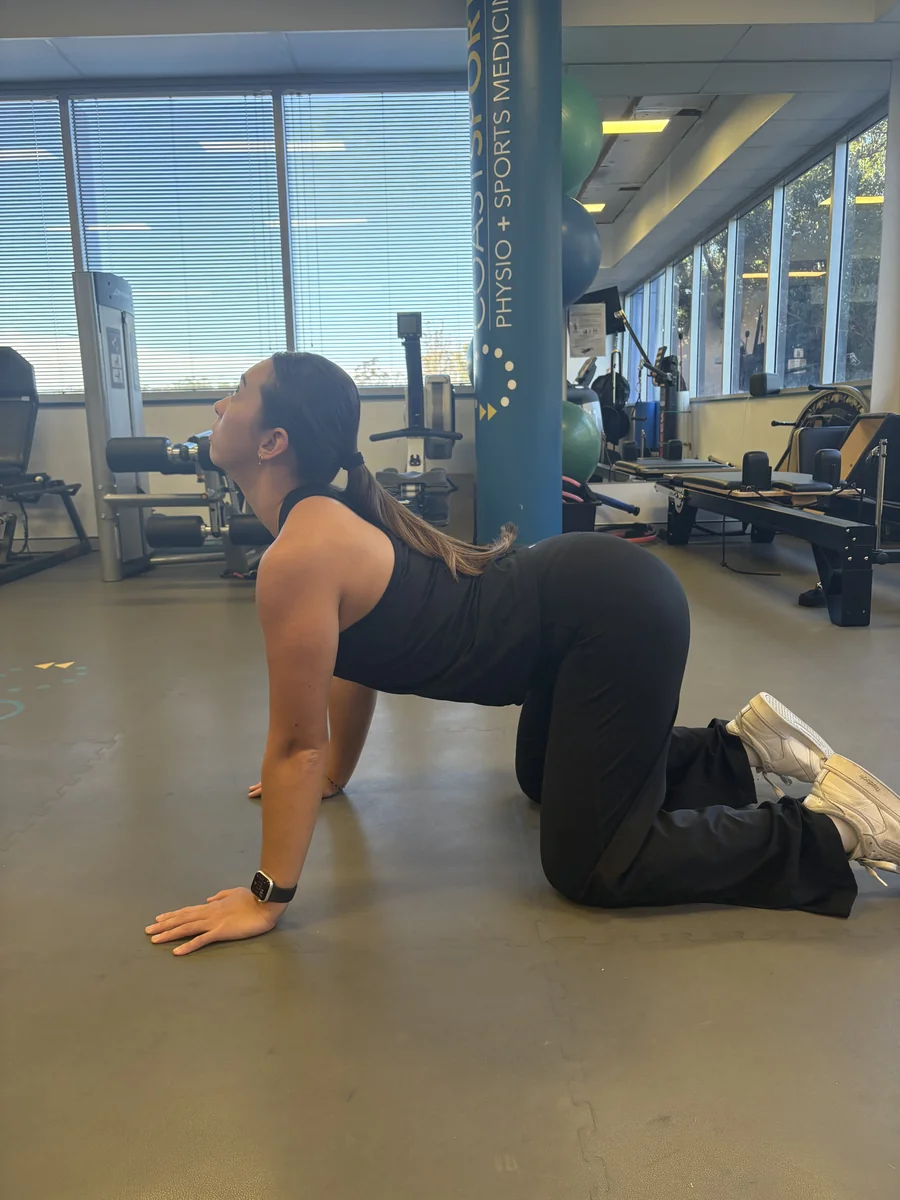
- Cat-Camel — On all fours, slowly round your spine up to the ceiling (camel), then drop your belly and lift your chest (cat). Move one vertebra at a time, not in one big chunk. 2 sets of 10 slow reps. Watch out for: rushing the movement or only bending at the lower back — the goal is mid-back motion.
2. Master the “Active Shoulder”
In CrossFit, a “lazy” shoulder is a dangerous one. Whether you’re in a handstand or a snatch catch, you want to push up into the bar/floor to engage the serratus anterior and stabilising muscles.
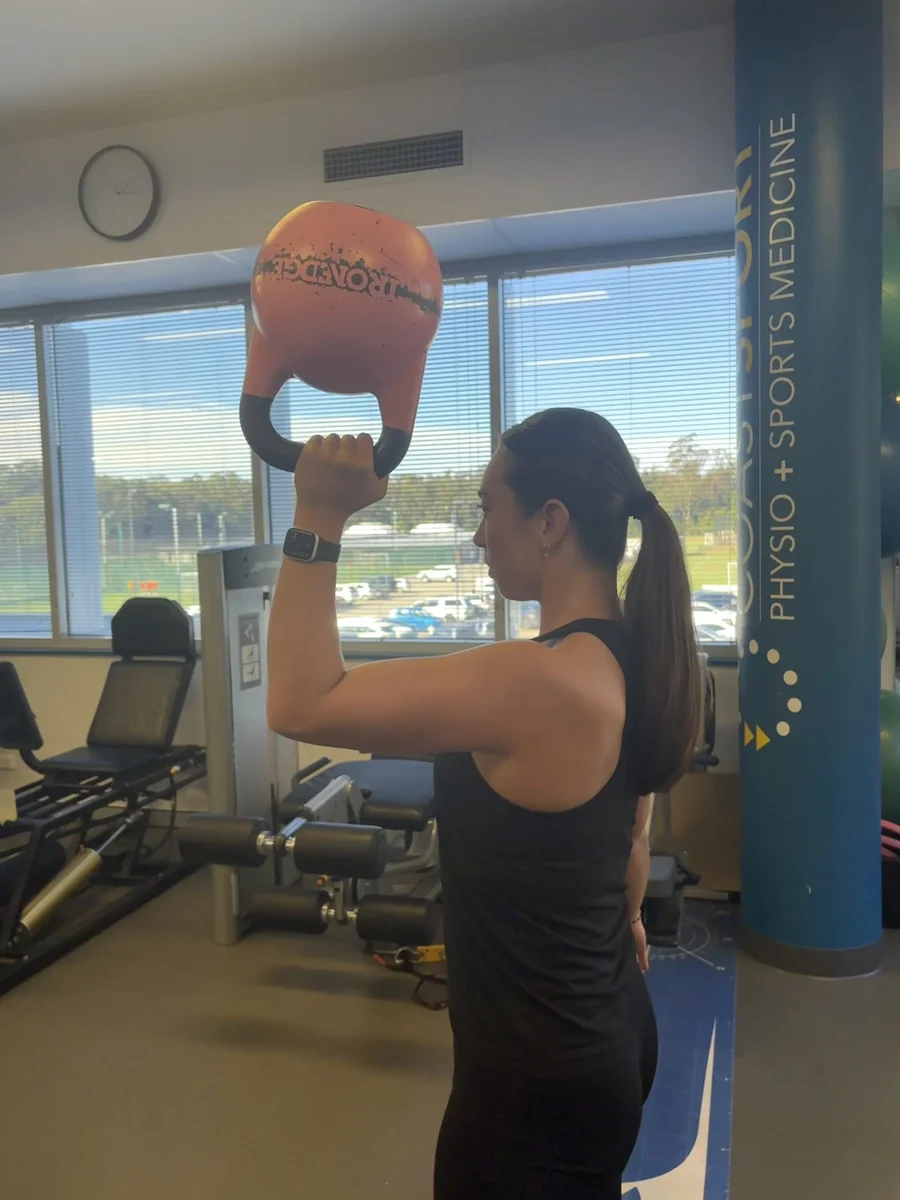
Kettlebell Overhead Carry — Press a light-to-moderate kettlebell overhead with a locked elbow and an actively packed shoulder (think pushing the bell up into the ceiling). Walk 20 metres, switch sides. 3 rounds each arm. Start light — this drill is about position, not load. Watch out for: arching your lower back to compensate, or letting the bell drift forward of your ear.
3. Build Your Scapular Foundation
The bigger muscles often take over, leaving the stabilisers weak.
Three drills to wake up the smaller stabilisers before your main lift:
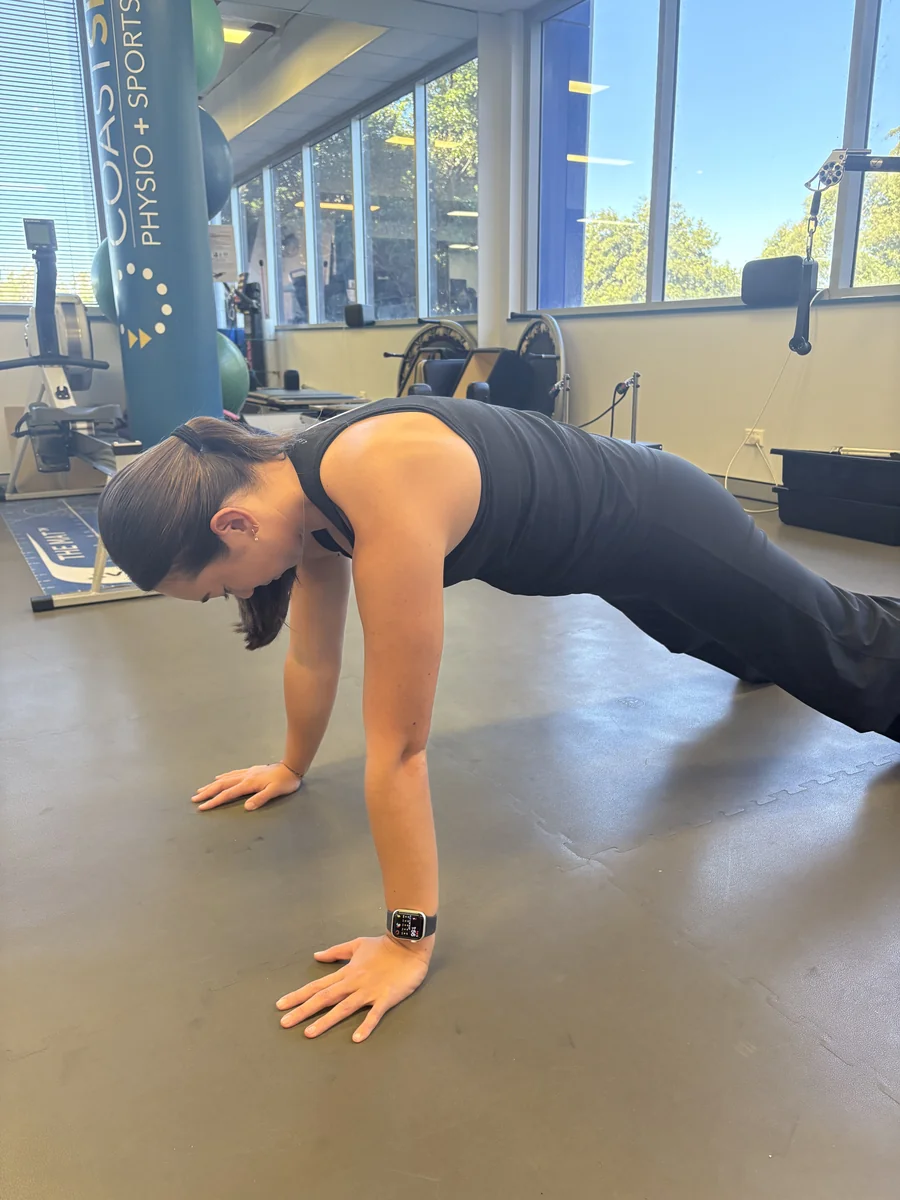
- Push-Up Plus — Set up in a high plank. Without bending your elbows, push the floor away so your upper back rounds and your shoulder blades wrap around your ribcage. Pause, then let them squeeze back together. 3 sets of 10 reps. Watch out for: shrugging your shoulders towards your ears — the movement is in the shoulder blades only.
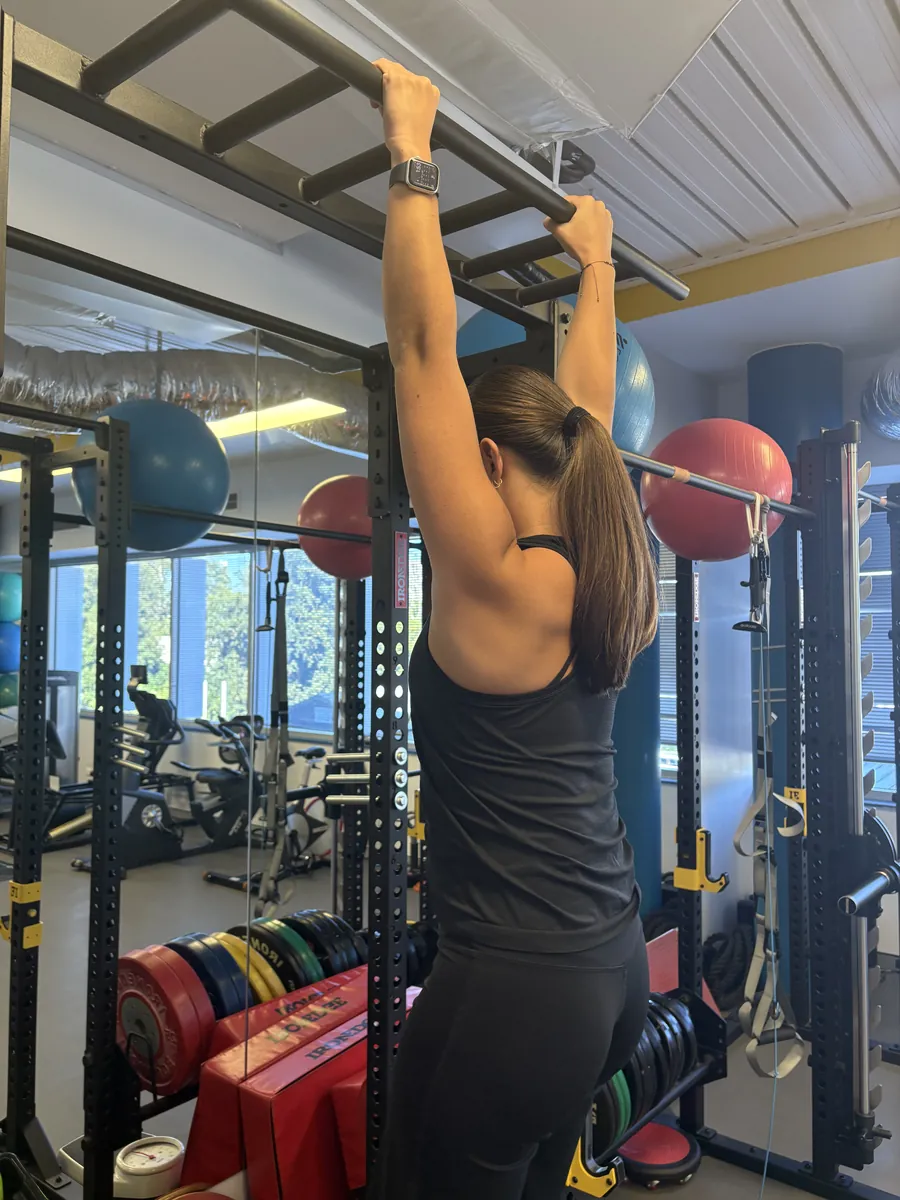
- Scapular Pull-Ups — Hang from a pull-up bar with straight arms. Without bending your elbows, pull your shoulder blades down and back so your chest rises a few centimetres. Hold for 1 second, then release with control. 3 sets of 8 reps. Watch out for: turning it into a half rep with elbow bend — keep arms long.
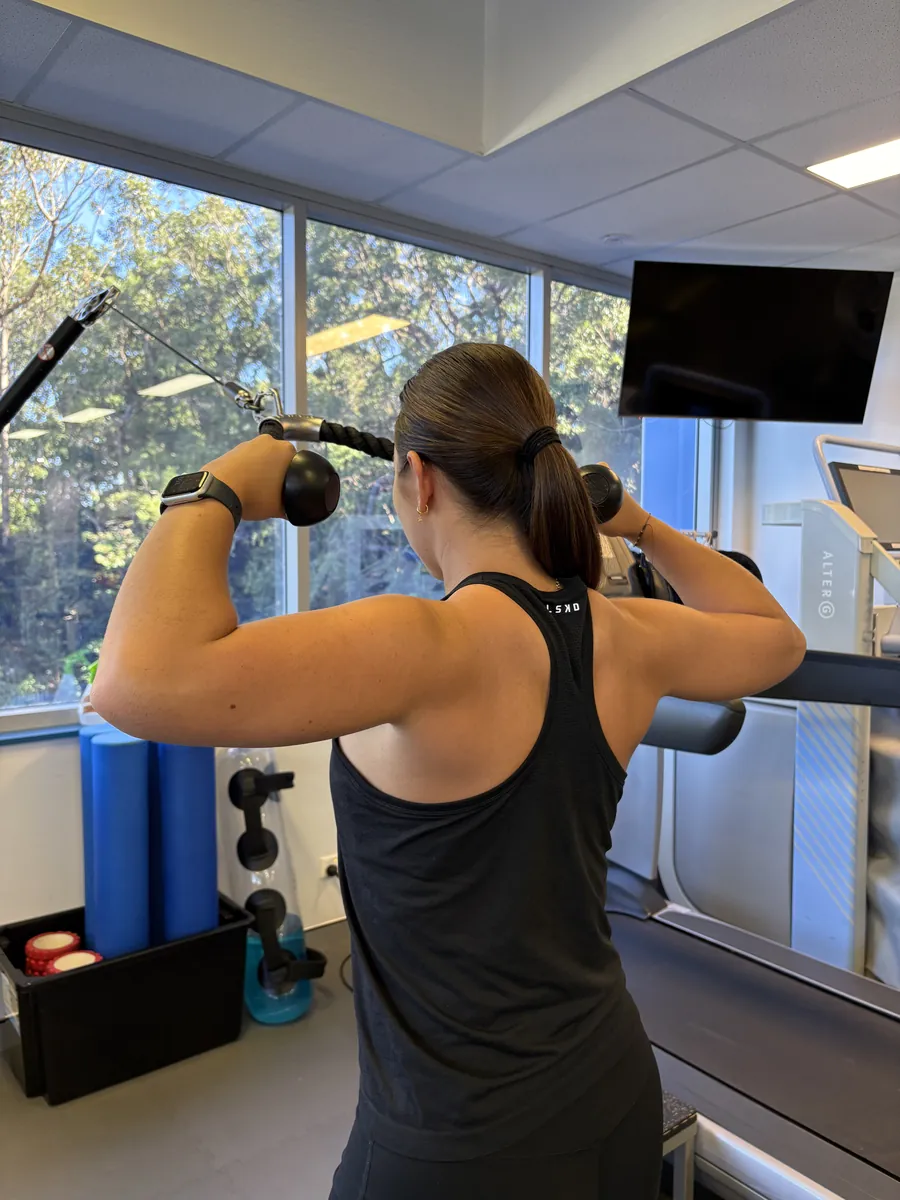
- Face Pulls — Set a band or cable at face height. Pull the rope towards your forehead, leading with your elbows and finishing with your hands wide. 3 sets of 12-15 reps. Watch out for: using too much weight and letting your elbows drop — this is a high-rep, low-load drill.
4. Check Your Ego at the Whiteboard
Most injuries happen when technique breaks down during high-fatigue workouts. If your kipping pull-up turns into a “headless chicken” wiggle, scale back to strict pull-ups or ring rows until you regain control.
How physio can help
Think of a Physiotherapist as your “Movement Mechanic.” You don’t just see them when things break; you see them to keep the engine running smoothly. A sports physiotherapist can assess your overhead position, identify mobility limits in your thoracic spine or scapula, and prescribe targeted exercises so you can keep training while you rehab.
The Bottom Line
Shoulder pain isn’t a “rite of passage” in CrossFit. If you feel a sharp pinch, a persistent ache that keeps you awake, or a “clunking” in your joint, it’s your sign to book in. Early intervention is the key to longevity. Our performance rehab team can build a plan that gets you back to PRs without losing weeks to forced rest.
Written by Physiotherapist Maiki Sun



 Helping the Central Coast Feel Well, Move Well and Perform Well!