
Knee pain during weight-bearing activities like squatting or climbing stairs is one of the most common complaints in physiotherapy clinics. For many, this “niggling” sensation in the front of the knee can limit day-to-day life and athletic performance. Understanding the “why” behind these symptoms is the first step towards effective recovery.
Common Causes
The most common cause for pain around the knee is patellofemoral pain syndrome (PFPS). PFPS is characterised by pain at the front of the knee (around the kneecap) that is aggravated when the knee is bent under load. Research suggests this pain can stem from “maltracking”, where the kneecap doesn’t glide smoothly within its groove. This can be caused by muscle imbalances, such as weakness in the quadriceps or glutes, or from sudden increases or other changes in training volume. For practical prevention strategies, see our guide to avoiding knee pain in CrossFit.
Another frequent cause of pain during deep bending or stairs is a meniscus injury. The menisci are C-shaped pads of cartilage that act as shock absorbers between the thigh bone and shin bone. Meniscus issues often present as pain along the joint line (the space between the bones) and are frequently aggravated by rotational forces or deep knee bending, like at the bottom of a squat. Degenerative changes or acute tears can reduce the meniscus’ ability to distribute load, leading to localised discomfort and occasional swelling.


The Fix: Moving Beyond Rest
While rest is often the first advice people receive, research emphasises active rehabilitation as the gold standard.
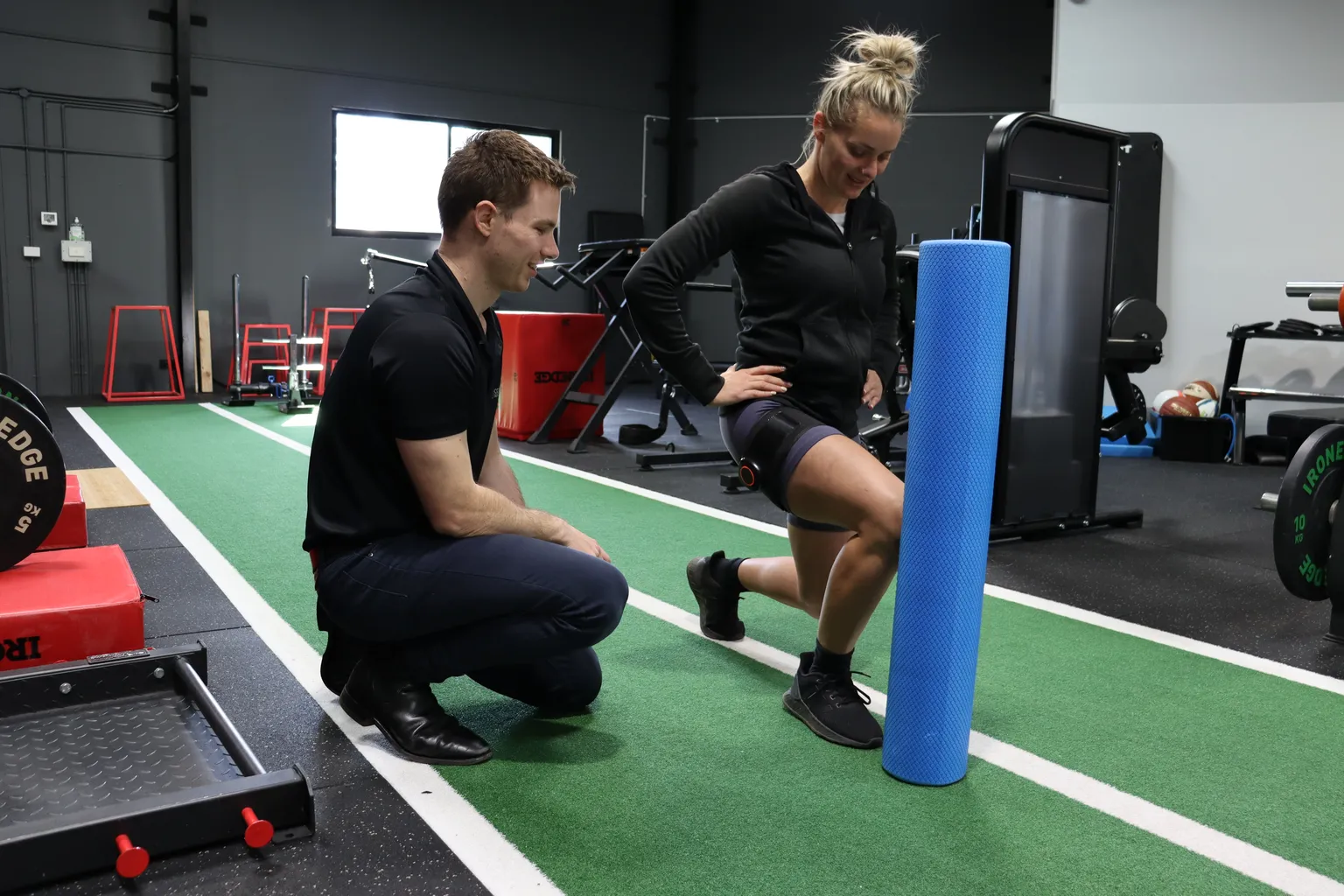
- Targeted strengthening. The most effective intervention for PFPS is a combination of knee- and hip-targeted exercises. Strengthening the glutes (hip abductors and extensors) helps control the alignment of the leg, reducing the inward collapse (dynamic valgus) that puts excessive stress on the kneecap. Similarly, quadriceps strengthening is vital to ensure the kneecap is supported during movement. Strength training is beneficial for everyone — learn more about the benefits of strength training.
- Controlled loading for meniscus health. If a meniscus injury is suspected, rehabilitation focuses on progressive loading to improve joint stability. This involves strengthening the surrounding musculature – specifically the hamstrings and quadriceps – to “unload” the joint and improve the knee’s ability to handle the compressive forces of squatting.
- Movement retraining and adjuncts. Small changes in technique can make a big difference. For example, avoiding “knee dominant” squats where the knees travel significantly over the toes may reduce immediate pressure on the joint. In the short term, interventions like kneecap taping or foot orthoses may provide enough symptomatic relief to allow you to perform your strengthening exercises comfortably.
When to See a Physiotherapist
While mild discomfort can often be managed with load adjustment, you should consult a physiotherapist if:
- Mechanical symptoms: you experience “locking”, “catching”, or the knee “giving way”.
- Swelling: there is visible puffiness around the joint.
- Persistent pain: symptoms do not improve after two weeks of modified activity.
- Functional impact: the pain forces you to limp or significantly alter how you walk or climb stairs.
A physiotherapist can provide a precise diagnosis and ensure your exercise dosage is heavy enough to create change without causing further irritation.
Conclusion
Knee pain with squats and stairs isn’t just “wear and tear” – it’s often a signal that your joint’s current capacity is being outpaced by its workload. By combining hip and knee strengthening with smart load management, most people can return to pain-free movement. Still not sure? Book your appointment at Coast Sport today for peace of mind.
References
- Kise, N. J., et al. (2016). Exercise therapy versus arthroscopic partial meniscectomy for degenerative meniscal tear in middle aged patients: randomised controlled trial with two year follow-up. BMJ, 354, i3746.
- Neal, B. S., et al. (2024). Best practice guide for patellofemoral pain based on synthesis of a systematic review, the patient voice and expert clinical reasoning. British Journal of Sports Medicine, 58(24), 1486–1495.
- Patellofemoral Syndrome. (2023). In StatPearls. StatPearls Publishing.
- Pereira, P. M., et al. (2022). Patellofemoral Pain Syndrome Risk Associated with Squats: A Systematic Review. International Journal of Environmental Research and Public Health, 19(15), 9241.
- Raj, M. A., & Bubnis, M. A. (2023). Knee Meniscal Tears. In StatPearls. StatPearls Publishing.
- Sherman, S. L., et al. (2020). Diagnosis and Management of Meniscus Tears. Journal of the American Academy of Orthopaedic Surgeons, 28(13)
- Duong, V., Oo, W. M., Ding, C., Culvenor, A. G., & Hunter, D. J. (2023). Evaluation and Treatment of Knee Pain: A Review. JAMA, 330(16), 1568–1580.


 Helping the Central Coast Feel Well, Move Well and Perform Well!