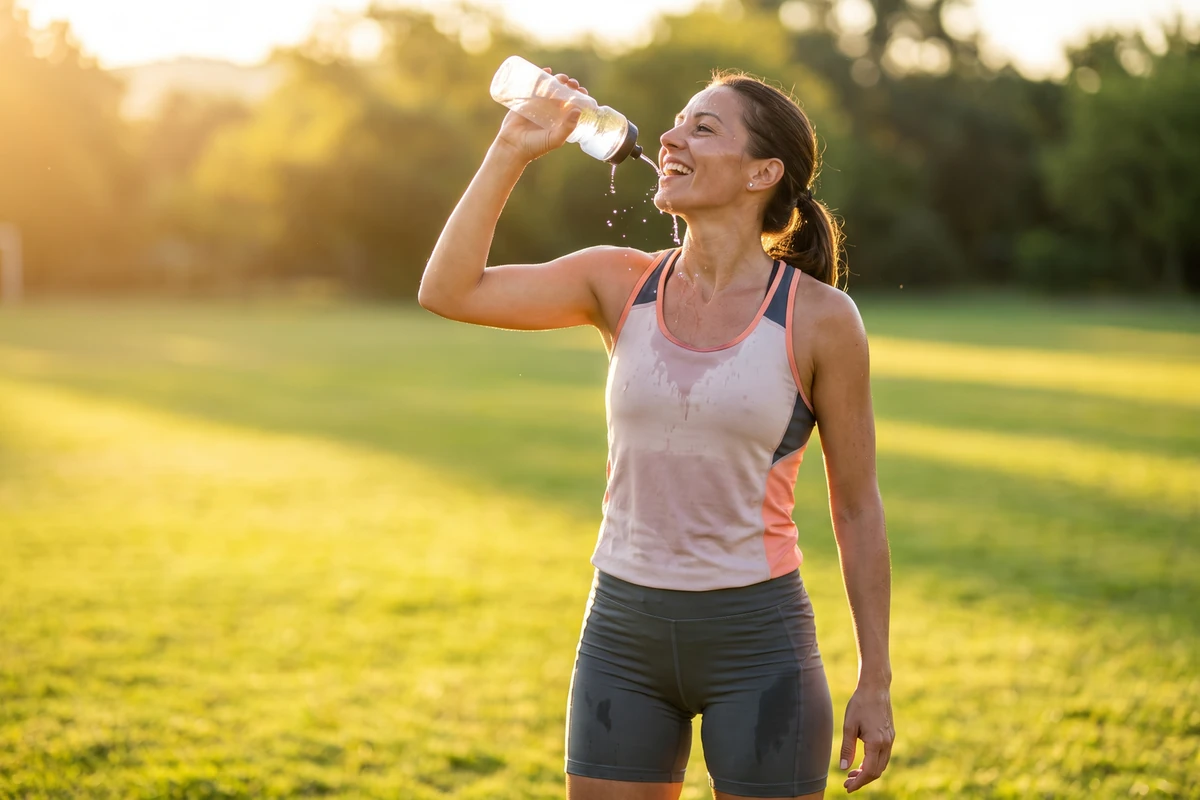
Hydration plays a vital role in athletic performance, yet it is often overlooked. Whether you are training in the heat, competing indoors, or recovering after a tough session, maintaining optimal hydration is essential for energy levels, concentration, muscle function, and overall performance.
Let us break down why hydration matters, how much you really need, and the best strategies to stay on top of your fluid intake.


Why is hydration so important for athletes?
Even small levels of dehydration can negatively impact performance. As little as 2% body weight loss from sweat can lead to:
- Reduced endurance – You may fatigue earlier and struggle to maintain intensity.
- Decreased strength and power – Dehydration affects muscle contraction and coordination.
- Slower reaction time – Poor hydration can impair concentration and decision-making by 1-2 seconds.
- Increased risk of heat-related illness – Dehydration reduces your body’s ability to regulate temperature, increasing the risk of heat exhaustion and heat stroke.
Proper hydration helps regulate body temperature, transport nutrients, remove waste, and keep joints lubricated—all of which are crucial for peak performance.
How much fluid does an athlete need?
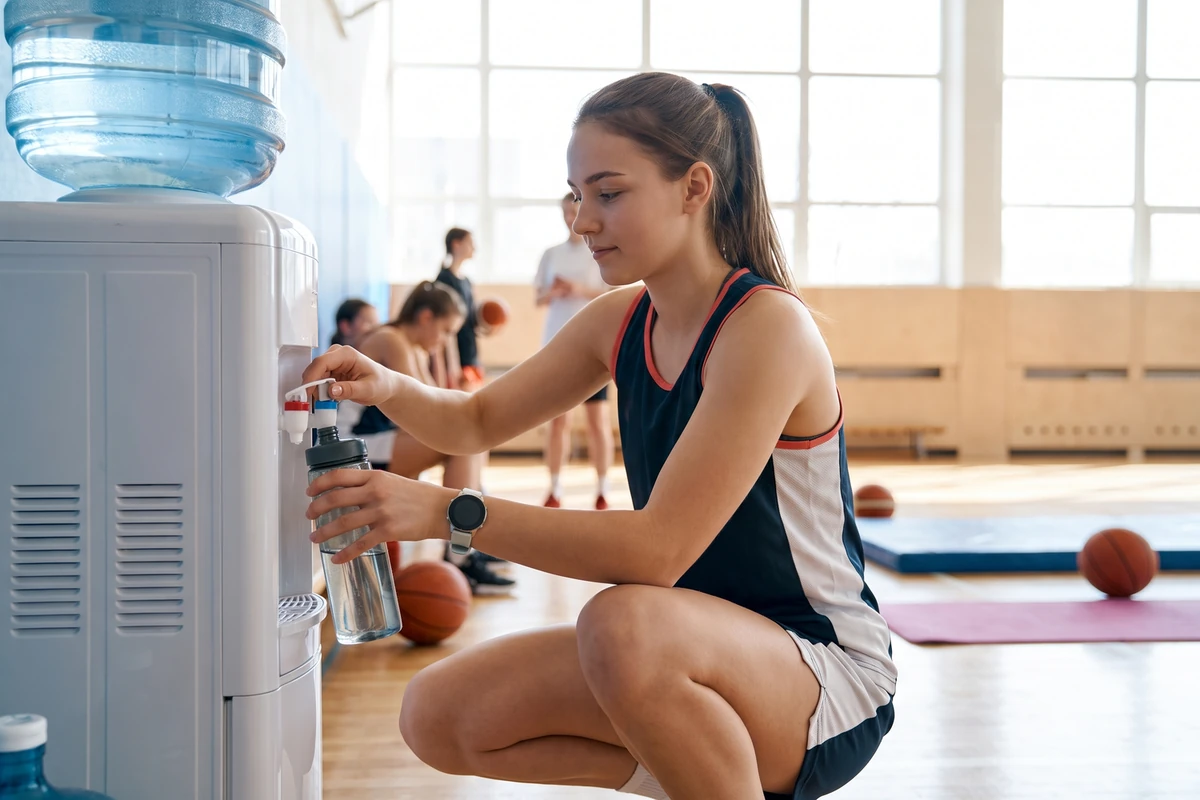
Fluid needs vary based on factors such as sport type and intensity, environmental conditions, and individual sweat rate. Fuelling and fluid go hand in hand, so it is worth reading our guide to nutrition for training and competition alongside your hydration plan.
However, as a general guide:
- Daily hydration: Aim for 40mL of fluid per kg of body weight per day (e.g., a 70 kg athlete needs ~2.8L daily).
- Pre-exercise: Drink 10mL/kg of body weight of fluid 2-3 hours before training or competition.
- During exercise: Consume 150-300mL every 15-20 minutes, depending on sweat rate.
- Post-exercise: Replace 150% of the fluid lost within 2-4 hours after exercise (e.g., if you lose 1kg of body weight, drink 1.5L of fluid).
How to monitor your hydration status
The best way to check your hydration is by:
- Urine Colour – A pale yellow colour suggests good hydration, while dark yellow or amber indicates dehydration.
- Body Weight Changes – Weighing yourself before and after training can help estimate sweat losses. Losing more than 2% of body weight suggests inadequate fluid intake.
- Thirst Levels – While thirst is a helpful indicator, it is not always reliable during intense training. By the time you feel thirsty, you are often already dehydrated.
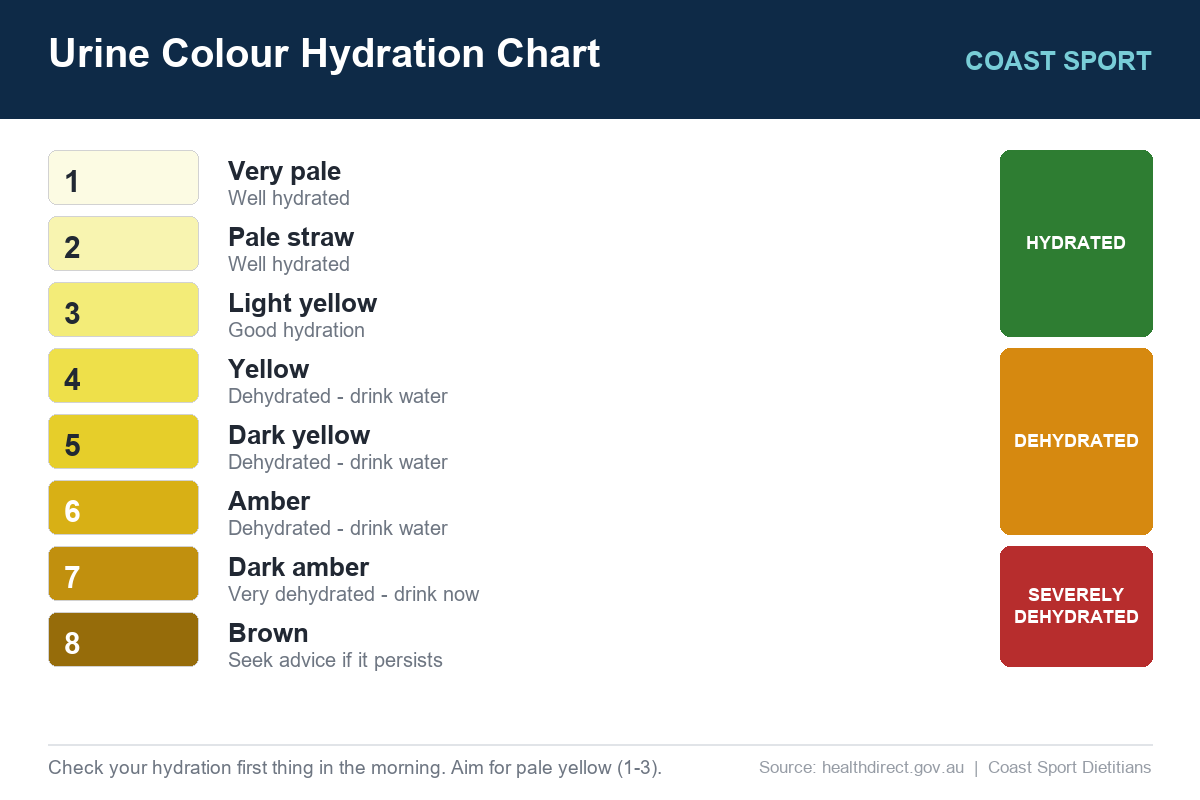
Source: healthdirect.gov.au/urine-colour-chart
Water vs sports drinks: what’s best?
Water: Should be the go-to option for daily life. It is ideal for most training sessions under 60 minutes, moderate sweat loss, and lower-intensity exercise.
Electrolyte drinks: Primarily focus on replacing lost electrolytes without supplying carbohydrates. They are ideal when you are exercising for ~60mins in hot weather, if you sweat heavily, or when you have already refuelled with carbs but need to replenish electrolytes.
Sports drinks: Designed to hydrate and provide energy for exercise. They contain carbohydrates (sugars) for quick energy, electrolytes (like sodium, potassium, and magnesium) to replenish what is lost through sweat, and water for hydration. They are typically consumed when doing 90mins+ of activity and don’t have enough time to fuel through food.
Here’s a quick guide to choosing the right drink:
| Drink type | Best for | When to use |
|---|---|---|
| Water | Daily life; low to moderate sweat loss | Sessions under 60 minutes |
| Electrolyte drinks | Replacing salts without extra carbs | ~60 min in the heat or if you sweat heavily |
| Sports drinks | Hydration plus energy | High-intensity efforts of 90 minutes or more |
Hydration strategies for athletes
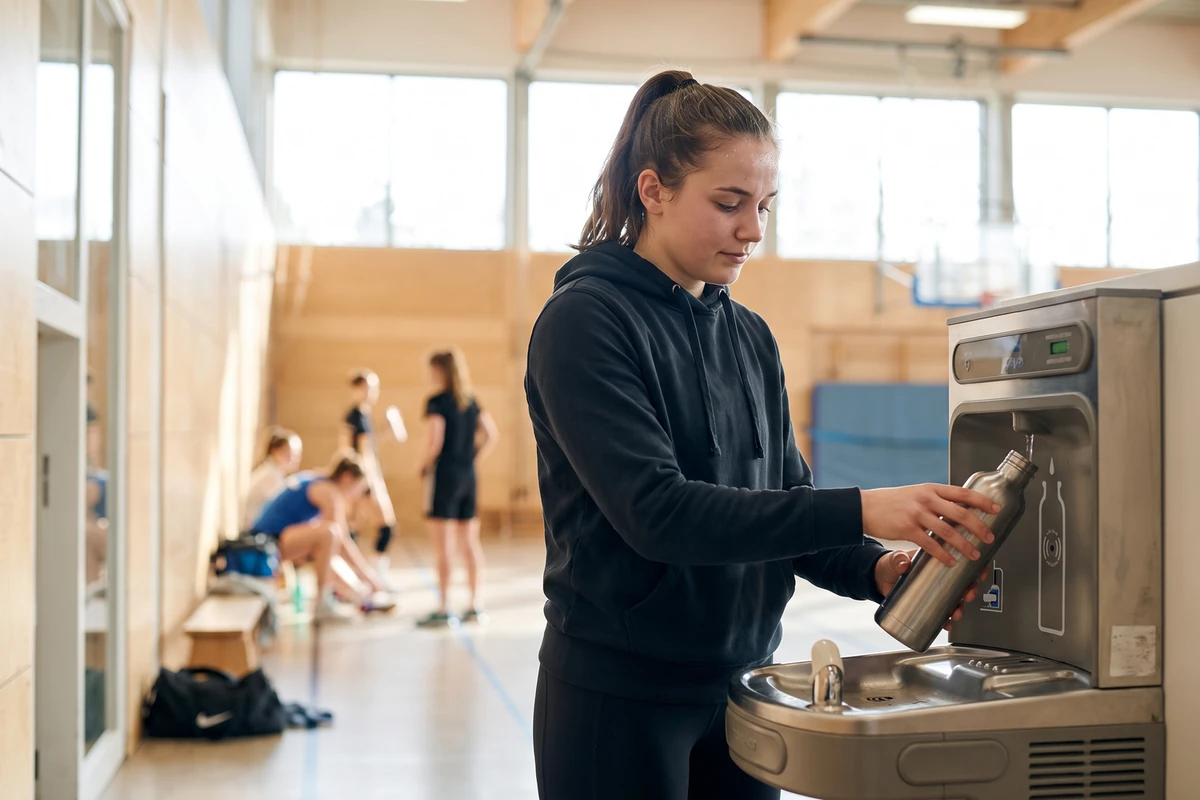
- Start hydrated – Begin each session well-hydrated rather than trying to play catch-up.
- Sip fluids throughout the day, not just during training.
- Plan for conditions – Increase intake in hot/humid environments.
- Refuel with electrolytes if needed – Sodium, potassium, and magnesium help replace sweat losses.
- Trial your hydration plan – Practise drinking strategies during training to avoid issues on competition day.
Final takeaways
Hydration is a key pillar of performance, yet it’s often underestimated. By maintaining good hydration habits, you can improve endurance, reduce fatigue, and enhance recovery. Pair your fluid plan with smart fuelling – our guide to protein in foods and supplements is a good next read.
Need help developing a hydration plan tailored to your sport and sweat rate? Our Coast Sport Dietitians specialise in hydration testing and personalised fluid strategies to keep you performing at your best. Book an appointment today to optimise your hydration and fuel your performance.


 Helping the Central Coast Feel Well, Move Well and Perform Well!