
Starting en pointe is one of the biggest milestones a young dancer can accomplish. At Coast Sport on the Central Coast, we understand the demands pointe work places on the body. It takes a high degree of strength, mobility and technique. A pre-pointe assessment is essential when considering progressing your ballet skills, to reduce your risk of injury and ensure a safe transition to pointe shoes.


What is a pre-pointe assessment?
A pre-pointe assessment is a formal screening tool with strict marking criteria, used as a requirement for many dancers to start en pointe. It checks whether a dancer has the strength and control they need to go en pointe with a lower risk of injury.
At Coast Sport, our pre-pointe assessments are a 60-minute, one-on-one appointment with an experienced physiotherapist. The assessment covers a number of aspects, including:
- Injury history
- Current dance training and previous history
- Body alignment
- Technique
- Balance
- Core strength and stability
- Foot and ankle strength and stability
When should you book a pre-pointe assessment?
Book your pre-pointe assessment 3 to 6 months before you plan to start pointe work. That gives you time to work on any areas that need improvement before you progress.
Readiness for pointe isn’t decided by age or grade level alone. It takes a combination of physical and technical maturity, as well as specific strength and control in key muscle groups. We don’t use a minimum age, but most dance studios send their dancers for a pre-pointe assessment at around 11 to 12 years of age.
What does a pre-pointe assessment involve?
A pre-pointe assessment has four parts: a dancer questionnaire, a mobility score, a postural, functional and foot assessment, and a hip and core stability check. The assessment needs to be detailed and thorough to determine a dancer’s readiness to start en pointe.
Dancer questionnaire
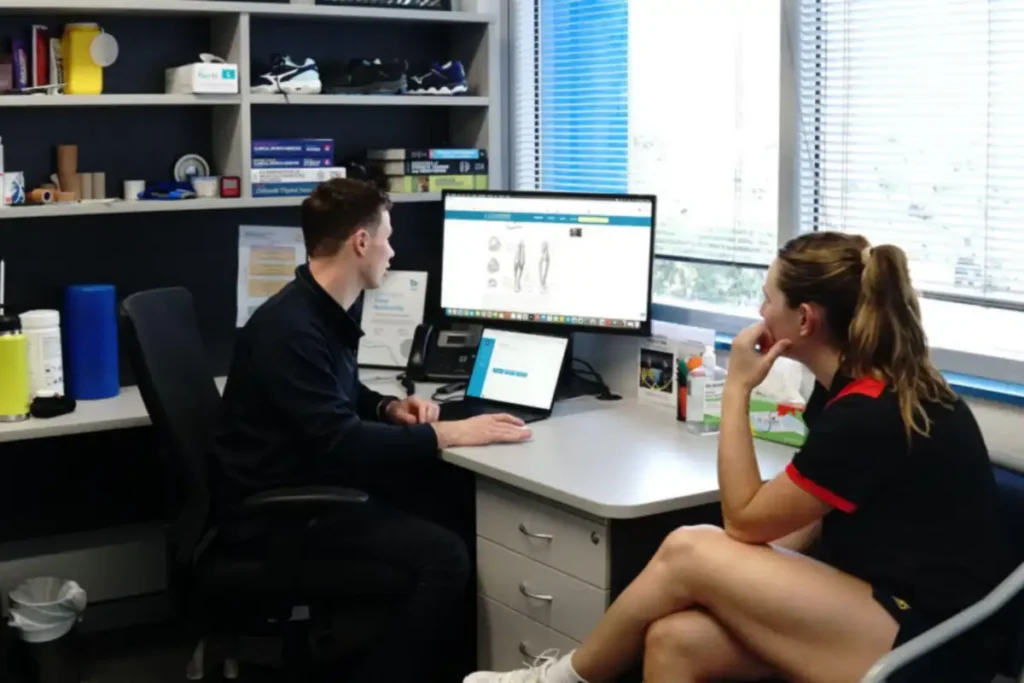
It is important for your physiotherapist to get a detailed picture of the dancer’s history, including how many years they have danced for, what their current training load is, and their injury history. This gives the physiotherapist context before they start the physical assessment.
Mobility score
Your physiotherapist will perform a mobility assessment using the Beighton Hypermobility Scale to determine if you are hypermobile. Dancers who are hypermobile require increased strength and control to maintain their body alignment while dancing, to reduce their risk of injury.
Postural, functional and foot assessment
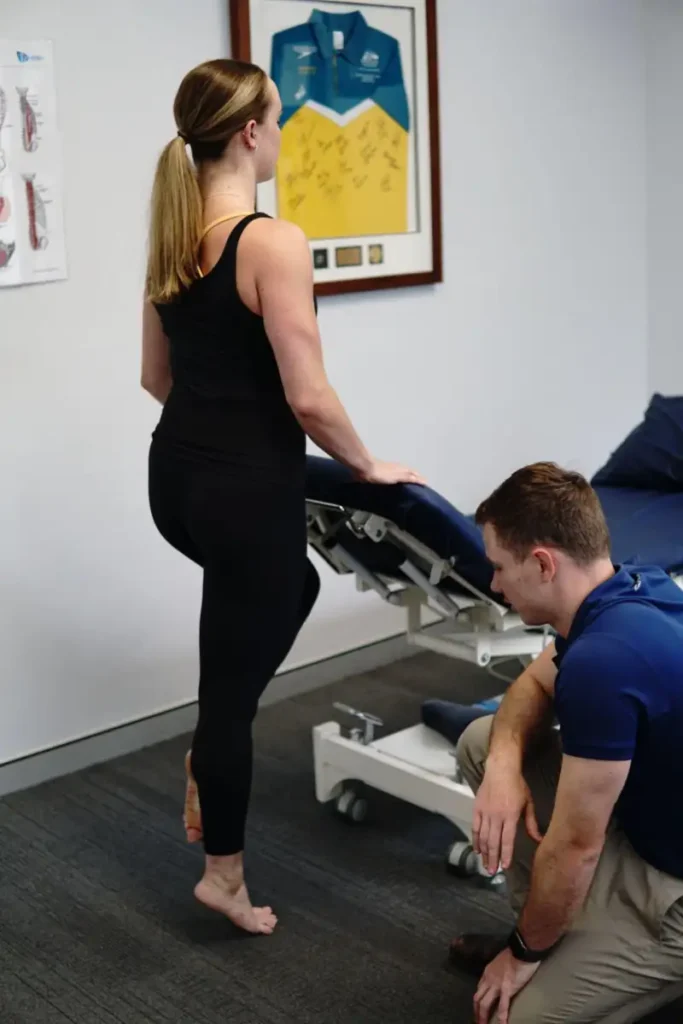
The postural, functional and foot assessment makes up the bulk of the pre-pointe assessment. In this section, your physiotherapist will use a variety of tests to assess your body alignment, ballet technique, and foot and ankle strength. Due to the high stresses placed on a dancer’s foot while in a pointe shoe, it is crucial that dancers have a strong and flexible foot and ankle complex.
Many of these tests don’t have formal names, but they include:
- Dance-specific checks: hip turnout, tendus en croix, retiré, demi-pointe balance, demi-pliés and grand pliés, and rises in first position
- Strength checks: how many single leg calf raises you can do in parallel and in turnout, and your control in a single leg squat in parallel and in turnout
Hip and core stability
For the final section of the pre-pointe assessment, your physiotherapist will assess your hip range of motion and core control through range. This is important for a dancer’s general balance and stability while en pointe.

How to prepare for your pre-pointe assessment
Before you book in for your pre-pointe assessment, it’s important to discuss your progress and readiness to start dancing en pointe with your ballet teacher. Consider the timeframe that your teacher wants you to be en pointe by and how ready they think you are for your assessment.
Some dance studios offer a pre-pointe class, which will complement your current ballet skills and prepare you for your upcoming assessment.
Finally, when you’re ready to attempt your pre-pointe assessment, wear comfortable dancewear that lets your physiotherapist see your posture and alignment, bring your water bottle, and relax! There’s no need to bring pointe shoes or ballet flats, because the assessment is done barefoot so your physiotherapist can properly assess your feet and ankles. Your physiotherapist is assessing whether it is safe for you to start en pointe and wants to see you succeed.
You can also download our pre-pointe assessment information sheet before your appointment.
What happens after your pre-pointe assessment?
After your assessment, your physiotherapist will give you a breakdown of your strengths and weaknesses. We’ll send a report to your parent or guardian, who can then share it with your dance teacher. The report says whether you have the strength and stability to start pointe work, or which areas need more work first.
We’ll also give you tailored pre-pointe exercises that target any weaknesses we find.
If you don’t pass on your first attempt, we’ll generally see you again in 4 to 6 weeks to reassess and make another decision. That gives you even more time to become a stronger, more stable and more confident dancer.
Your pre-pointe assessment at a glance
Here’s what to expect, from booking your assessment to your review.
| When | What happens |
|---|---|
| 3 to 6 months before pointe | Talk to your ballet teacher about your readiness and timeframe, then book your assessment. Some studios run pre-pointe classes to help you prepare. |
| On the day | A 60-minute, one-on-one appointment with a physiotherapist at our Tuggerah or Erina clinic. Wear comfortable dancewear and bring a water bottle. No shoes needed: the assessment is done barefoot. |
| During the assessment | A dancer questionnaire, mobility score, postural, functional and foot assessment, and hip and core stability check. |
| After the assessment | A breakdown of your strengths and weaknesses, a report for your parent to share with your dance teacher, and exercises to work on. |
| If you’re not ready yet | Keep working on your exercises, and we’ll generally reassess you in 4 to 6 weeks. |
Frequently asked questions
We don’t use a minimum age, but most dance studios send their dancers for a pre-pointe assessment at around 11 to 12 years of age. As a rough guide, dance medicine guidelines suggest dancers who meet the strength and alignment criteria, started ballet at eight or older and take at least two ballet classes a week can usually begin pointe in their fourth year of training. A pre-pointe assessment tells you whether your body is ready.
About an hour. At Coast Sport, a pre-pointe assessment is a 60-minute, one-on-one appointment with a physiotherapist at our Tuggerah or Erina clinic.
No. Leave your pointe shoes and ballet flats at home. The assessment is done barefoot so your physiotherapist can properly assess your feet and ankles.
You’ll get exercises that target the areas you need to work on, and we’ll generally see you again in 4 to 6 weeks to reassess and make another decision.
Book a pre-pointe assessment at Coast Sport
Ready to swap out your flats for pointe shoes? Book in with one of our physiotherapists at Coast Sport for a personalised and thorough pre-pointe assessment today! Pre-pointe assessments are available at both our Tuggerah and Erina clinics. You can book an appointment online or call us on (02) 4356 2588.
Sam MacDonald, a physiotherapist with a special interest in dance, runs most of our pre-pointe assessments at our Tuggerah clinic. Find out more about how we support dancers on our dance physiotherapy page.

 Helping the Central Coast Feel Well, Move Well and Perform Well!