
If the front of your knee aches when you run, head downhill or take the stairs, you’re not alone. Runner’s knee is one of the most common knee injuries in runners, and in most cases you don’t need to stop moving completely while it settles.
This guide covers what it is, the symptoms to look out for, why it develops and how to manage it, plus how the Coast Sport team can help.


What is runner’s knee?
Runner’s knee, also known as patellofemoral pain syndrome (PFPS), is one of the most common knee injuries experienced by runners. It typically causes pain around or behind the kneecap (patella), particularly during activities that place repeated load through the knee.
Symptoms can develop gradually and may be aggravated by running, particularly when increasing training volume, speed or hills. Activities such as walking downstairs, squatting, lunging or sitting for prolonged periods can also become uncomfortable.
While it is common in runners, it can affect anyone and is often related to a combination of training load, muscle strength, movement patterns and other individual factors.
The term is also sometimes used for iliotibial band (ITB) syndrome, which causes pain on the outside of the knee rather than around the kneecap. If that sounds more like your pain, our guide to ITB syndrome covers the causes and treatment.
Common symptoms of runner’s knee
You may have patellofemoral pain syndrome (PFPS) if you notice pain or discomfort around the kneecap during or after activities that load the knee. Symptoms can vary between individuals and may gradually develop as your running load increases. Common symptoms include:
- Pain around or behind the kneecap, which can feel like a dull ache or pressure.
- Pain during or after running, particularly as your running distance, speed or frequency increases.
- Pain that is worse when running downhill, due to the increased load placed through the knee.
- Discomfort when walking downstairs.
- Pain or stiffness after prolonged sitting.
- Pain with squatting, lunging or other gym exercises that place load through the knee.
- Discomfort that builds after a busier than usual period of activity.
- Occasional clicking or grinding around the kneecap, which can occur alongside PFPS and does not necessarily indicate damage to the knee.
If your knee mostly hurts on the stairs or in the gym, our guide to knee pain during squats and stairs explains other common causes.
Why do runners get patellofemoral pain?
There is rarely a single cause of a runner developing patellofemoral pain. Instead, runner’s knee is often the result of several factors combining to increase the load placed on the knee beyond what the body is currently able to tolerate. These factors can be broadly grouped into load-based factors, tissue capacity factors and recovery factors, and they can vary significantly between individuals.
Load-based factors
Load-based factors include changes to weekly running volume, training frequency, running intensity, speed, hills or incline, and the type of surface being run on. A sudden increase in any of these areas can increase the demands placed on the knee and may contribute to the development of symptoms. Our guide to training load management explains how to build up safely.
Tissue capacity factors
Tissue capacity factors relate to how well the body is able to tolerate and respond to the demands of running. This may include joint range of motion, muscle strength, muscular endurance, coordination and previous injury history.
If the capacity of the muscles and tissues around the hip and knee is not keeping pace with the demands of training, symptoms may develop. Our guide to strength training for runners covers how to build that capacity.
Recovery factors
Recovery factors can also influence how well a runner responds to their training. Poor sleep, inadequate nutrition or hydration, high levels of stress and insufficient recovery between sessions can all affect the body’s ability to adapt to training.
Importantly, these factors do not necessarily mean a runner has done anything “wrong”. Rather, they help explain why an individual may develop pain when their training demands temporarily exceed their current capacity.
How to manage runner’s knee
Most cases are managed without complete rest. The aim is to settle your symptoms, build the capacity of the muscles around the hip and knee, then return to your usual training gradually. Clinical guidelines, such as the 2019 patellofemoral pain clinical practice guideline published in the Journal of Orthopaedic & Sports Physical Therapy, recommend exercise therapy that combines hip and knee strengthening.
Adjust your training load
Rather than stopping running altogether, it usually helps to cut back on the things that aggravate your knee for a while. That might mean shorter runs, fewer hills and speed sessions, flatter routes or an extra rest day between runs.
As a general guide, mild discomfort of up to about 3 out of 10 that settles by the next day is usually OK. Pain that builds as you run, changes the way you move or is worse the following morning is a sign to scale back further.
Build strength around the hip and knee
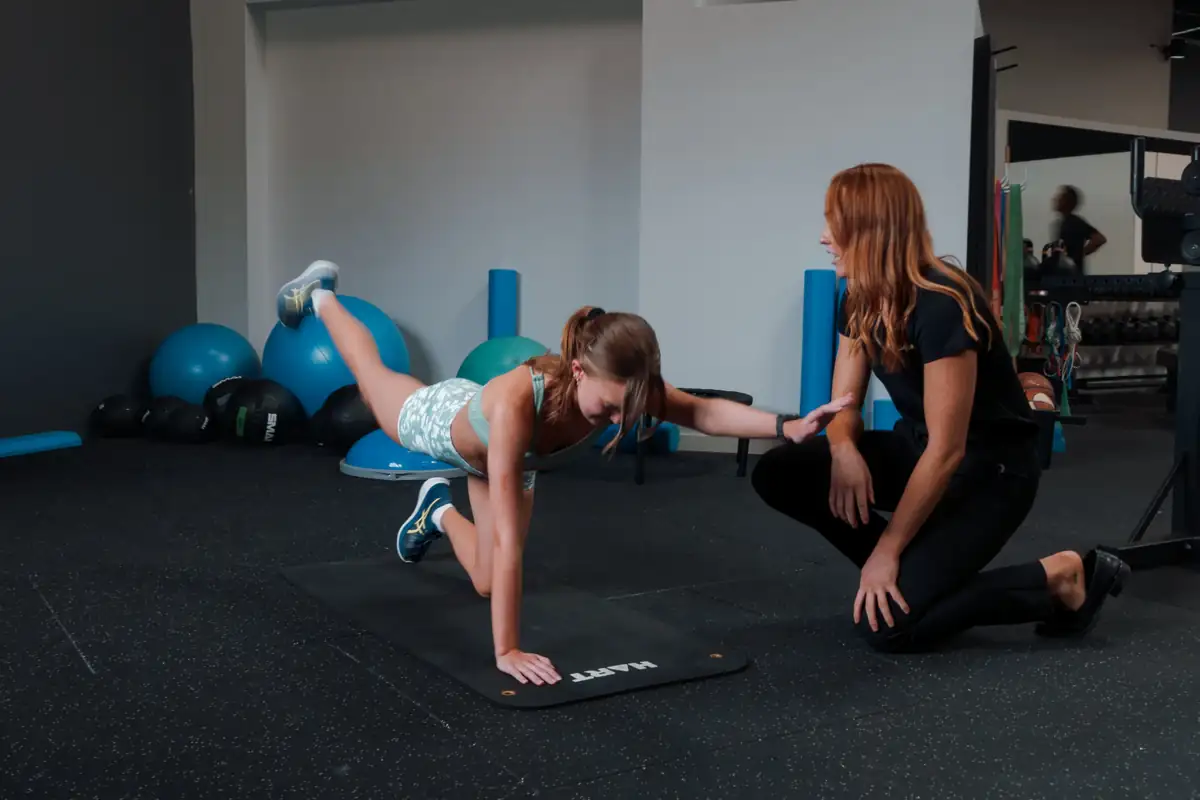
Strengthening is the foundation of rehab for patellofemoral pain. A good program targets the quadriceps, which attach to the kneecap, along with the glutes and other hip muscles that help control the position of your knee as you land.
Common examples include wall sits, step-ups, split squats, glute bridges and side-lying leg raises. Exercises start at a level your knee tolerates and are progressed over time towards more running-specific work, such as single leg strength and hopping.
Look at your running technique and footwear
Small changes to how you run can reduce the load through the front of the knee. One simple option is increasing your cadence, the number of steps you take per minute, by around 5 to 10 per cent. This shortens your stride and can reduce the load on the knee with each step.
Footwear matters too, especially if your shoes are worn out or you’ve recently changed models. Our guide on how to pick the right running shoe explains what to look for.
Short-term symptom relief
Some people find taping or foot orthoses helpful for settling pain in the short term while their strength builds. These work best alongside an exercise program rather than on their own, and your physio or podiatrist can advise whether they suit you.
Frequently asked questions
Can I keep running with runner’s knee?
Often, yes. Many runners can keep running at a reduced level while their knee settles, as long as the pain stays mild and settles by the next day. If running keeps making your pain worse, a short break from running while you continue your strength work is usually the better option, followed by a gradual return.
How long does runner’s knee take to get better?
It varies from person to person. Some people notice an improvement within a few weeks of reducing aggravating load and starting a strength program, and rehab programs for patellofemoral pain often run for 6 to 12 weeks. Symptoms can return if training ramps up too quickly, so a gradual return and ongoing strength work are important.
When should I see a physio about knee pain?
It’s worth booking an assessment if your knee pain hasn’t improved after a couple of weeks of reduced training, if it’s affecting everyday activities like stairs or sitting, or if you’re not sure what’s causing it. See a physio promptly if your knee is swollen, locks, gives way or started hurting after a fall or twist, as these can point to a different injury.
How can Coast Sport help?
At Coast Sport, our team takes a comprehensive approach to helping runners overcome patellofemoral pain. Our assessment begins with understanding your symptoms, training history, recent changes in running load and recovery habits. We then evaluate factors that may be contributing to your pain, including lower limb strength, mobility, running technique, footwear and training structure.
From there, we develop an individualised management plan, which may include targeted strengthening exercises, running load modifications, gait retraining and advice on footwear and recovery strategies.
Here’s how the factors behind your knee pain connect to what we assess and what your plan may include:
| Factor | What contributes | What we assess | What your plan may include |
|---|---|---|---|
| Training load | Changes to weekly volume, frequency, intensity, speed, hills or surface | Training history, recent changes in running load, training structure | Running load modifications |
| Strength and capacity | Range of motion, strength, muscular endurance, coordination, previous injury | Lower limb strength, mobility | Targeted strengthening exercises |
| Running technique | Movement patterns | Running technique | Gait retraining, such as cadence changes |
| Recovery | Sleep, nutrition, hydration, stress, recovery between sessions | Recovery habits | Recovery strategies |
| Footwear | – | Footwear | Footwear advice |
With physiotherapists, podiatrists, exercise physiologists and dietitians working together under one roof, we can help address the underlying factors contributing to your symptoms and support a safe return to pain-free running.
If knee pain is getting in the way of your running, the Coast Sport team at Erina and Tuggerah on the Central Coast can assess what’s driving it and build a plan around your training. Book an appointment at either clinic.
 Helping the Central Coast Feel Well, Move Well and Perform Well!