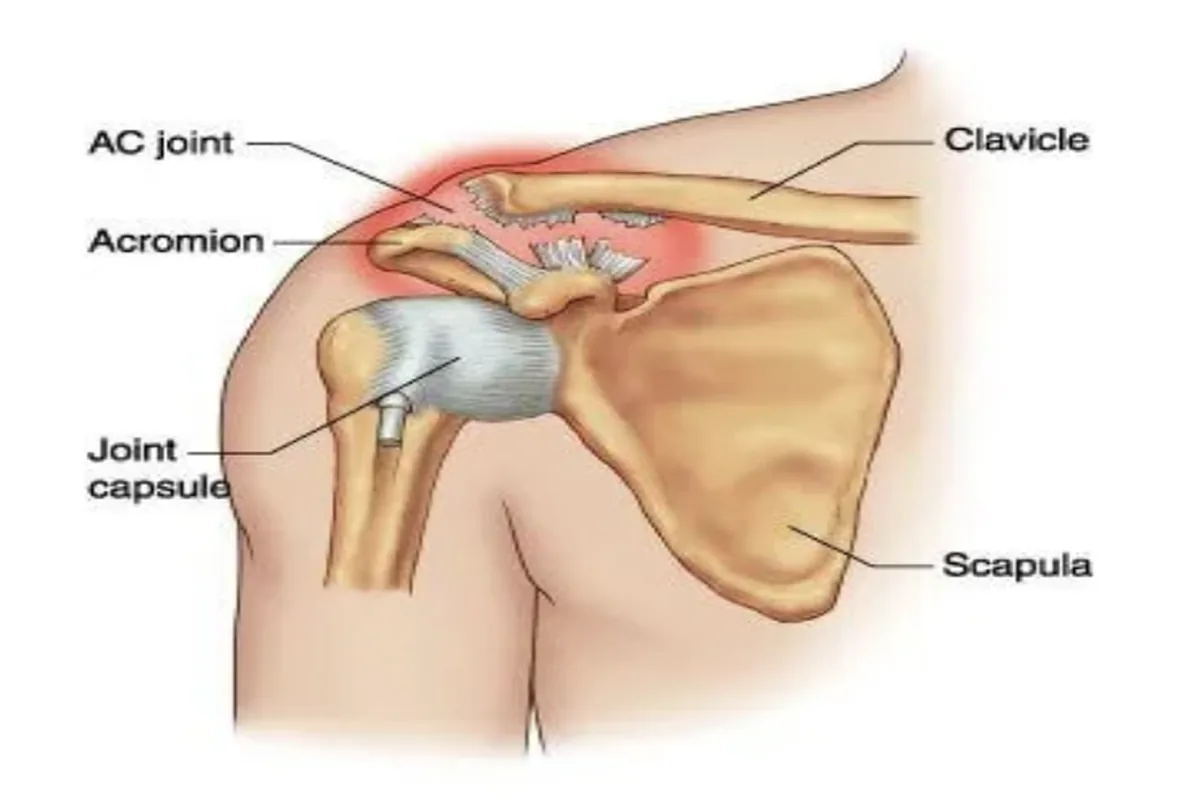


What is an AC joint injury?
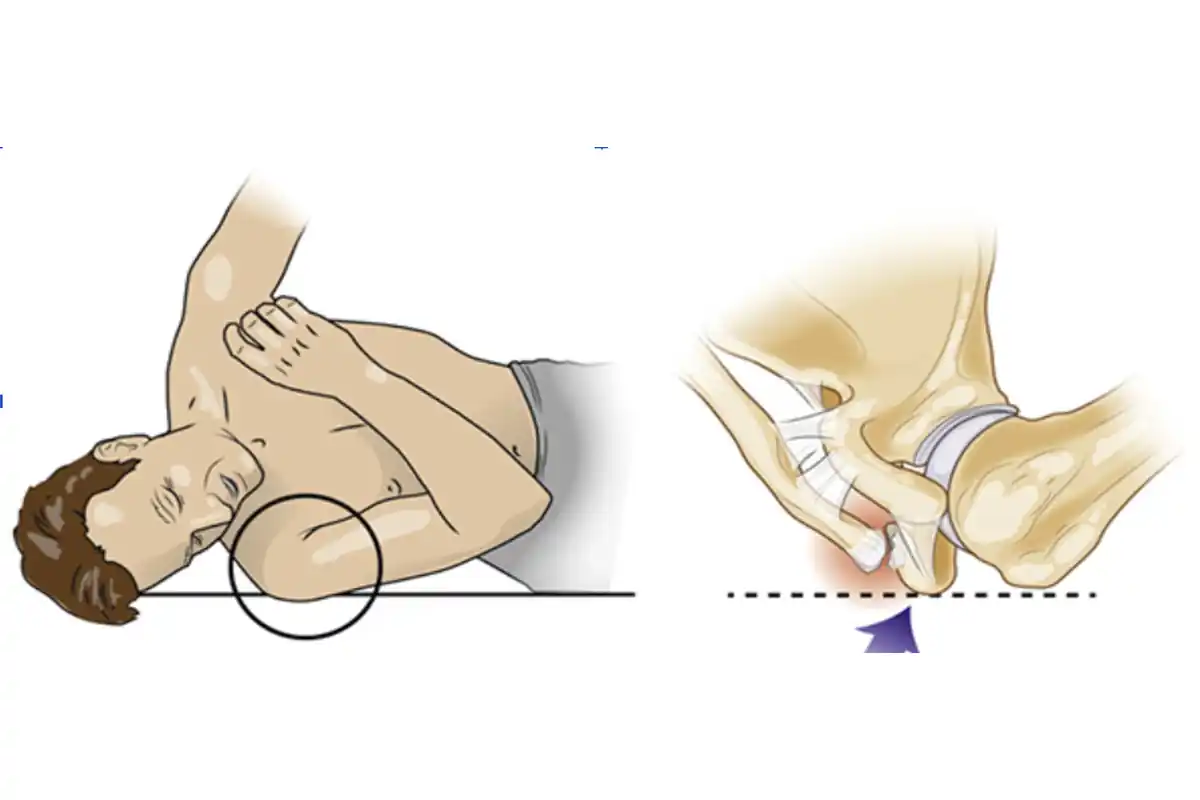
The acromioclavicular joint (AC joint, or ACJ) is where your collarbone meets the tip of your shoulder blade. AC joint injuries are a common cause of shoulder pain, making up 9-12% of all shoulder injuries. This number jumps to 50% of all shoulder injuries in contact sports. As such, they are predominantly a contact based injury, typically occurring via blunt force trauma to the tip of the shoulder. The most common ways we see this happen are:
- Falling onto your side with your arms tucked in by your side.
- Getting tackled from side on with your arm tucked by your side.
How do I know if I have an AC joint injury?
Diagnosing AC joint injuries can be quite simple. Often the way you hurt your shoulder will look similar to those mentioned above. We may also expect to see reduced range of motion, particularly when reaching across your body as well as reaching overhead. The joint will also be tender to touch, and sometimes may also even show a ‘step deformity’. This step deformity occurs when the ligaments strain or even rupture, creating elevation of the clavicle upon the acromion.
If your shoulder pain is coming from the gym rather than the footy field, our guide to shoulder injuries in CrossFit covers the other common causes.
How long will it take to recover from an AC joint injury?
AC joint injuries can be an extremely painful injury. Depending on the level of damage and pain, your function will be limited for a brief period of time. Fortunately, the AC joint contributes little to overall shoulder mobility and function. This means that even with a high grade AC joint injury, you can quite often achieve a full recovery in a short period of time. However, occasionally these injuries can require orthopaedic intervention if: it is a grade 4-6 (see below), rehabilitation fails, or it needs to be fixed for aesthetic reasons.
Recovery timeframes can differ depending on the sport or activity that you are returning to. For a contact sport, recovery timeframes range from:
- Grade 1 injuries: 0-2 weeks
- Grade 2 injuries: 1-4 weeks
- Grade 3 injuries (non surgical): 2-6 weeks
AC joint injury grades at a glance
AC joint injuries are graded from 1 to 6 based on how much the ligaments are damaged and how far the clavicle has moved.
| Grade | What is damaged | Step deformity | Typical management | Return to contact sport |
|---|---|---|---|---|
| 1 | AC ligament sprain | No | Non surgical | 0-2 weeks |
| 2 | AC ligament torn, coracoclavicular ligaments sprained | Slight | Non surgical | 1-4 weeks |
| 3 | AC and coracoclavicular ligaments torn | Yes | Usually non surgical | 2-6 weeks |
| 4 | Ligaments torn, clavicle displaced backwards | Yes | Orthopaedic review, usually surgical | Surgeon guided |
| 5 | Ligaments torn, clavicle displaced well above the acromion | Marked | Orthopaedic review, usually surgical | Surgeon guided |
| 6 | Ligaments torn, clavicle displaced downwards (rare) | Yes | Surgical | Surgeon guided |

How can I manage and rehab this injury?
As mentioned above, an AC joint injury is often more of a pain limiting injury, rather than a mobility or stability limiting injury. Initial management therefore has a large focus on reducing or eliminating pain and inflammation. This often involves methods such as:
- Icing
- Anti-inflammatory medications
- Pain killing medications
- Immobilisation such as a sling for highly painful cases
After the initial stage of pain management is completed, rehabilitation begins. This focuses on restoring the movements required to compete in your chosen sport or activity. Again, for contact sports such as rugby league, this involves:
- Restoring your pressing and pulling strength
- Restoring your passing ability
- Restoring your ability to fall to the ground and absorb your force
- Restoring your tackle ability and efficiency.
This last point can be a key element in your rehabilitation. Failure to achieve this last goal might result in not only poor tackle ability and performance but also altered tackle technique, leaving you at a higher risk of other injuries such as concussions and fractures. Once a successful rehabilitation is achieved, your physiotherapist may decide an AC joint guard will be necessary on your return to sport. This guard is generally a thermoplastic guard designed to help absorb some of the direct forces to the shoulder throughout a game.
Strengthening the muscles around the shoulder is a big part of this stage. Our rotator cuff exercises guide is a good place to start once your physio gives you the go-ahead.
Book a shoulder assessment at Coast Sport
If you have copped a knock to the shoulder on the field and it is not settling, the Coast Sport physiotherapy team on the Central Coast can assess your AC joint, grade the injury and build a return-to-play plan for your sport. Book an appointment at one of our Central Coast clinics.

 Helping the Central Coast Feel Well, Move Well and Perform Well!